
Biography
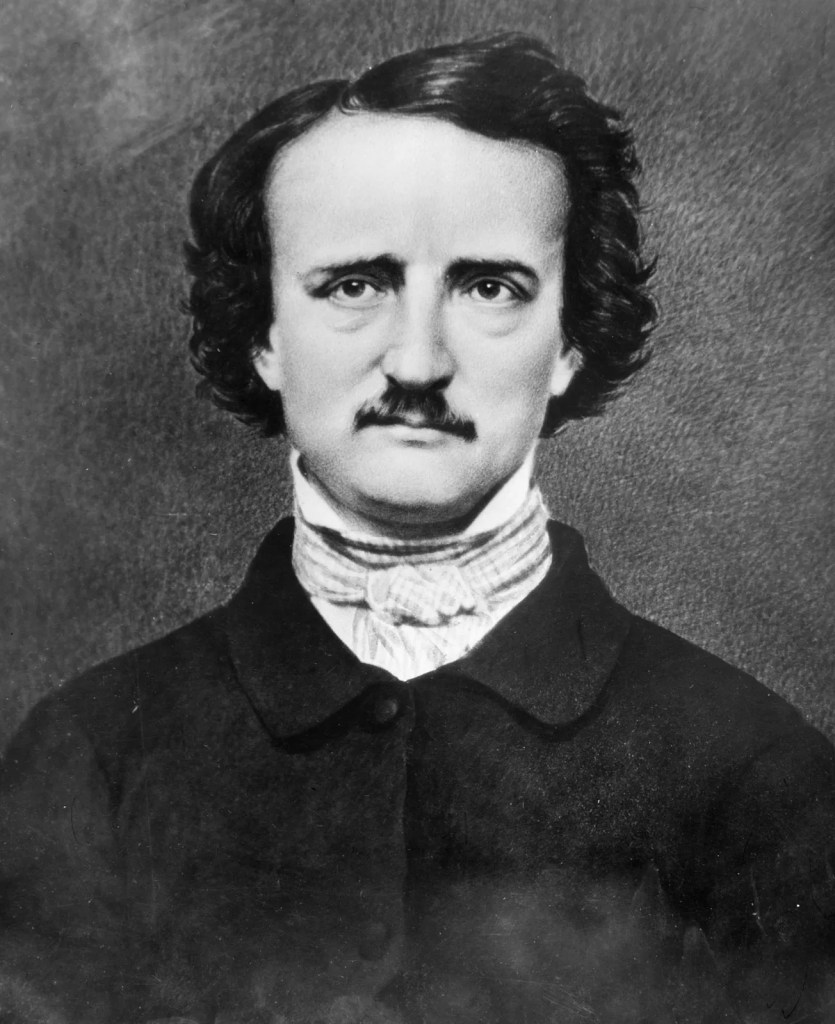
Edgar Allan Poe was born January 19, 1809 and died October 7, 1849. He was an author, poet, and literary critic and is known as one of the most prominent voices in Gothic fiction.
Poe was born in Boston, Massachusetts but was raised in Richmond, Virginia by John and Frances Allan after his father abandoned his family in 1810 and his mother, actress Elizabeth Poe, died just one year later. The young writer joined the US Army after dropping out of the University of Virginia due to financial difficulties, but he did not excel at this venture and left the service after anonymously publishing his first collection of verses, “Tamerlane and Other Poems,” in 1827.
Over the course of his career, Poe worked for a number of magazines and literary journals as both a writer and editor—work which required him to split his time between numerous cities, notably New York, Baltimore, and Philadelphia. In 1836, at the age of twenty-seven, he married his thirteen-year-old cousin, Virginia Clemm—much to the bafflement of readers both modern and contemporary.
Disease and poverty haunted Poe throughout much of his life, and thus became significant themes in his work; several of his family members, including his mother, Eliza Poe, and his cousin-wife, Virginia, succumbed to tuberculosis, and the effects of these tragedies—in tandem with the visceral horror of TB patients’ symptoms and the ever-present injustice of class disparity—are evident in pieces such as 1842’s “The Masque of the Red Death.” Madness and all its manifestations were also themes Poe frequented in his writing, particularly in works such as “The Tell-Tale Heart,” “The Cask of Amontillado,” and perhaps his most famous poem, 1845’s “The Raven.” Poe’s writings, while fascinatingly gruesome, provide insight into the life and mind of a deeply troubled man, and this is similarly reflected in accounts of his death.
In late 1849, Poe was found rambling incoherently and seemingly wearing another man’s clothes in a Baltimore tavern. After several days of fluctuating lucidity, Poe died in the hospital on the seventh of October. While the official cause of death was cited by contemporary papers as “congestion of the brain,” theories from scholars, doctors, and Poe’s devotees have proliferated following his end; some believe he died of carbon monoxide poisoning, others suspect rabies, but as a definitive answer has never been reached, most have come to accept that Poe’s demise will remain as mysterious as the strange tales for which he is so loved.
Below is a selection of Poe’s most notable short stories. Read at your own discretion—and please, enjoy.

Short Stories by Edgar Allan Poe
MS. Found in a Bottle (1833)
Berenice (1835)
Silence — A Fable (1837)
Ligeia (1838)
The Fall of the House of Usher (1839)
William Wilson (1839)
The Man of the Crowd (1840)
The Murders in the Rue Morgue (1841)
Eleanora (1841)
The Oval Portrait (1842)
The Masque of the Red Death (1842)
The Black Cat (1842)
The Pit and the Pendulum (1842)
The Tell-Tale Heart (1842)
The Mystery of Marie Rogêt (1842–1843)
The Premature Burial (1844)
Mesmeric Revelation (1844)
The Oblong Box (1844)
The Purloined Letter (1844)
Some Words With a Mummy (1845)
The Imp of the Perverse (1845)
The System of Doctor Tarr and Professor Fether (1845)
The Facts in the Case of M. Valdemar (1845)
The Cask of Amontillado (1846)
 The Raven Post