
Biography
Edith Wharton (née Jones) was born January 24, 1862 and died August 11, 1937. She was an accomplished poet and author and is now known as one of the most prominent writers of the Gilded Age.
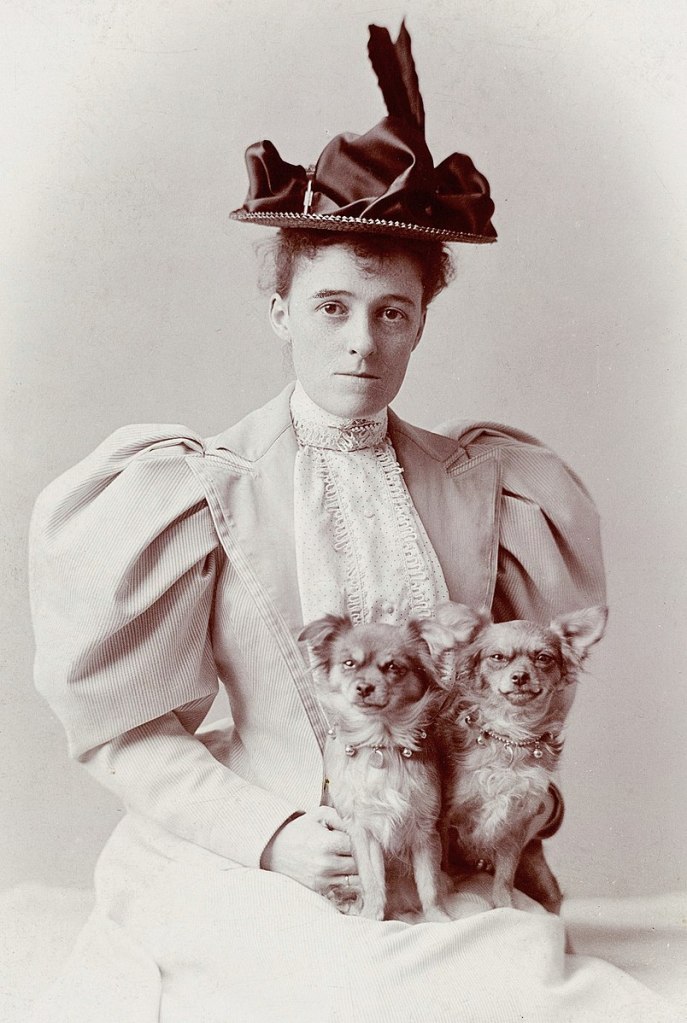
Born to a wealthy real estate family, Wharton—then Edith Newbold Jones—grew up in a brownstone on New York’s 23rd Street. As her family was well-traveled (and, no doubt, because she was privately educated by multiple instructors), Wharton was multilingual; in particular, she could speak German, French, and Italian in addition to her native English.
Her work was first published at the age of fifteen, when she translated Heinrich Karl Brugsch’s poem, “Was die Steine Erzählen” (“What the Stones Tell”), into English; however, as her family denounced writing as an improper occupation for a high-society woman, the translation was published under a pseudonym. She went on to publish numerous original poems, but not until she was twenty-nine did she publish her first short story, “Mrs. Manstey’s View.”
Wharton was a prolific writer and dabbled in supernatural fiction, though the majority of her literary work focused on such topics as interfamilial relationships, repressed sexuality, and an interrogation of societal norms. The tales gathered here are just a few of her more macabre offerings, though they, too, explore a range of culturally significant themes and provide insight into the mind of a historically venerated writer.
Below is a selection of Wharton’s most significant supernatural works. Read on at your own discretion—and please, enjoy.

Short Stories by Edith Wharton
The Lady’s Maid’s Bell (1902)
The Eyes (1910)
Afterward (1910)
The Triumph of the Night (1914)
Kerfol (1916)
Miss Mary Pask (1925)
Bewitched (1926)
Mr. Jones (1930)
Pomegranate Seed (1931)
 The Raven Post